
Core Management Group
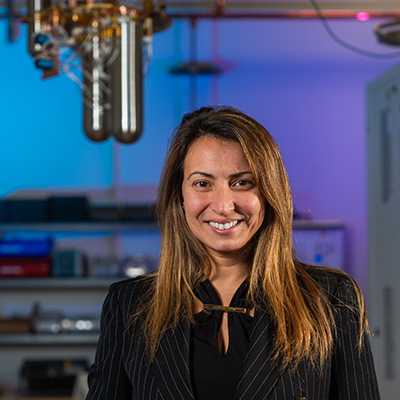
Anna Grassellino
Chief Technology Officer, Fermilab
Associate Lab Director, Technology Directorate (Interim)
SQMS Center Director
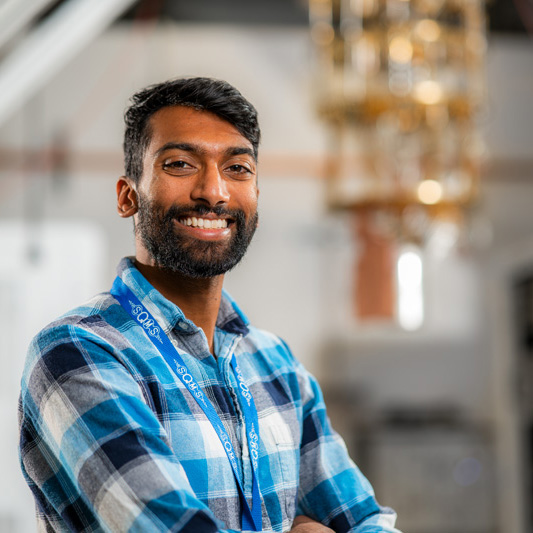
Akshay Murthy
SQMS Center Deputy Director
Materials Characterization, Co-Lead
Associate Scientist, Fermilab
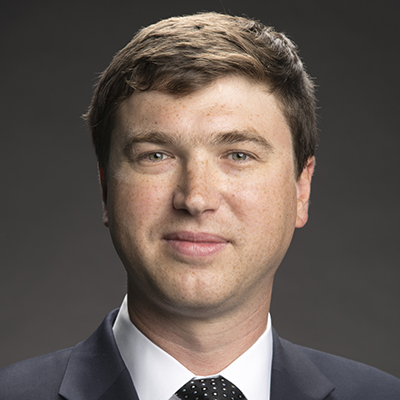
Roni Harnik
Science Thrust Leader
Senior Scientist, Quantum Theory Department Head, Fermilab
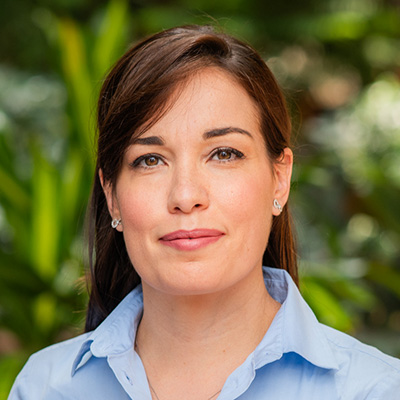
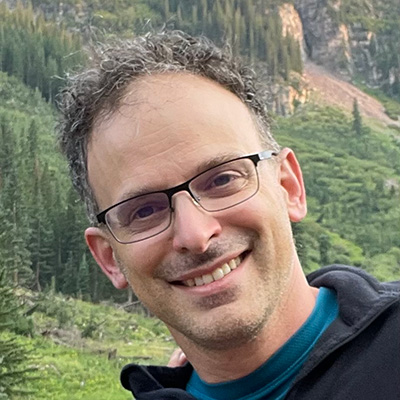
Silvia Zorzetti
Architectures & Use Cases Thrust Leader
Department Head, Quantum Computing Co-Design and Communication, Fermilab
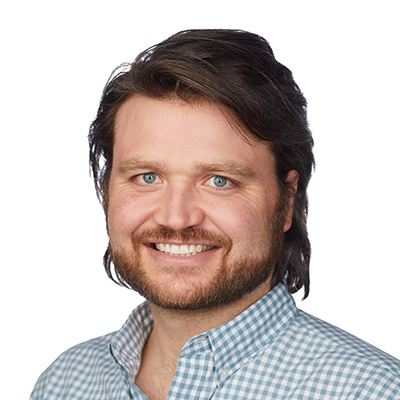
Andrew Bestwick
Rigetti Lead PI
2D QPU, Lead
Director of Quantum Device Architecture, Rigetti Computing
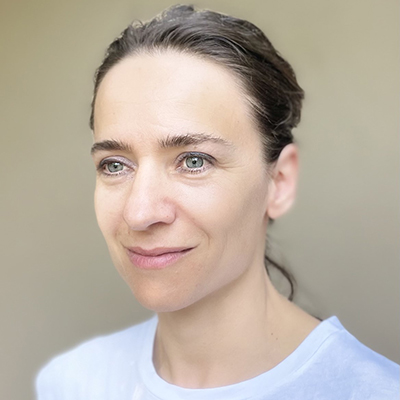
Caterina Braggio
INFN Lead PI
Sensing for Particle Physics, Co-Lead
Associate Professor, University of Padova & INFN
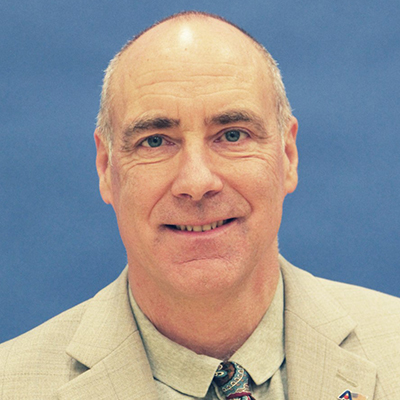
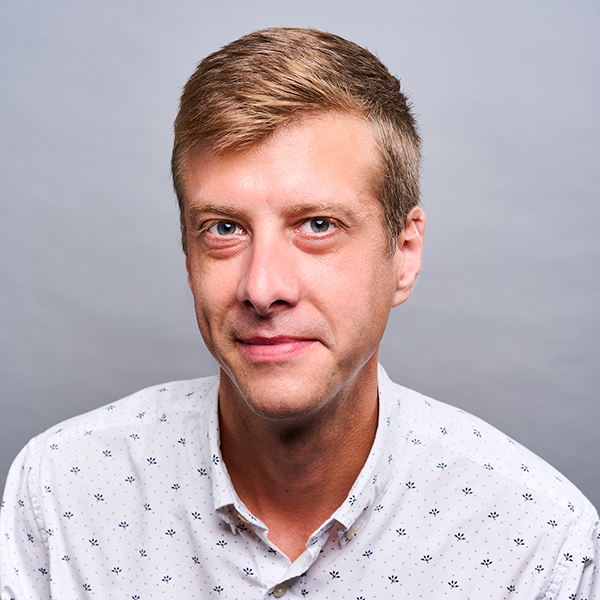
Matthew Kramer
Ames National Lab Lead PI
Editorial and Communications Board, Lead
Distinguished Scientist, Materials Science and Engineering Associate Professor, Department of Materials Science and Engineering, Iowa State University
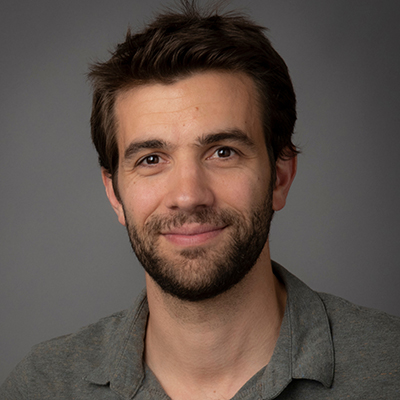
Florent Lecocq
NIST Lead PI
Novel 2D qubits, Amplifiers, Sensors, Co-Lead
Senior Research Associate, NIST
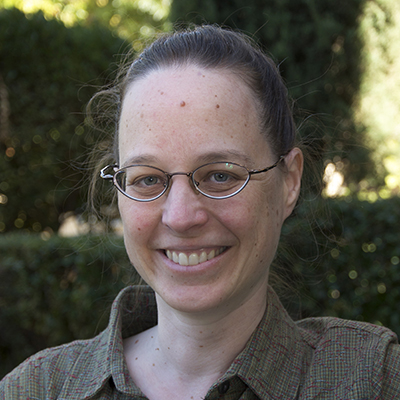
Eleanor G. Rieffel
NASA Ames Research Center Lead PI
Architecture & Resource Estimates, Lead
NASA Senior Researcher for Advanced Computing and Data Analytics and QuAIL Lead, NASA Ames Research Center
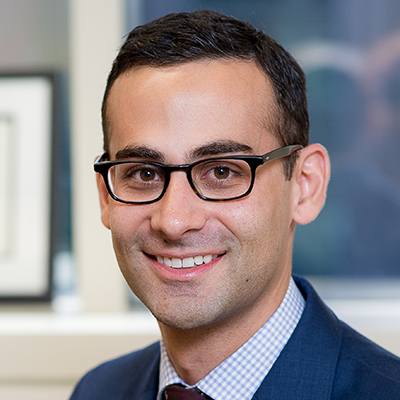
James Rondinelli
Northwestern University Lead PI
Understanding Qubit Loss Mechanisms, Co-Lead
Professor, Northwestern University
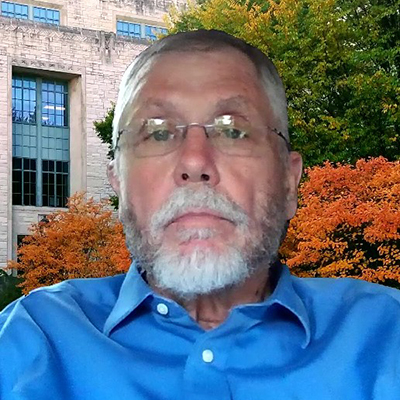
James A. Sauls
LSU Lead PI
Superconducting Properties, Co-Lead
Professor and Hearne Chair of Theoretical Physics, Hearne Institute of Theoretical Physics, Department of Physics and Astronomy, Louisiana State University
Executive Support Team
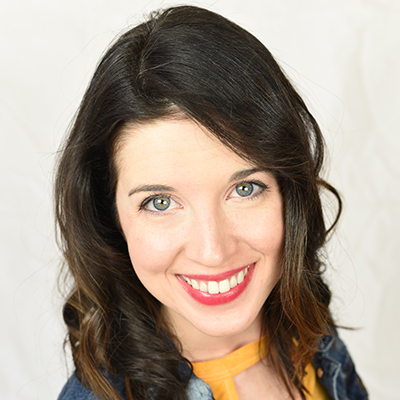
Hannah Adams
Communications and Partnership Manager
Communications and Partnership Manager, Fermilab
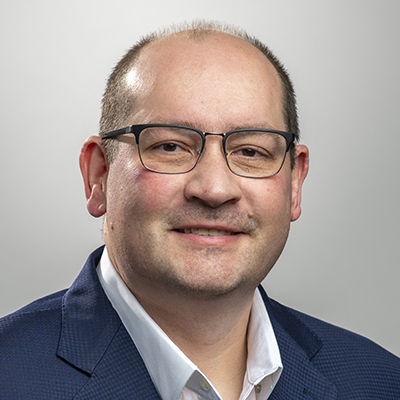
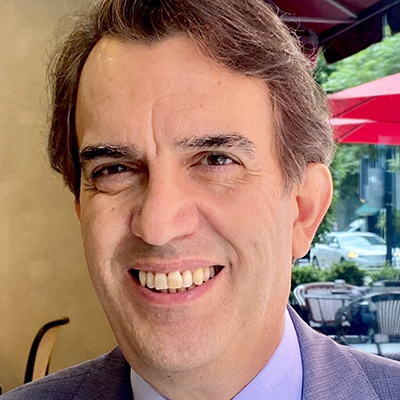
Technology Thrust
Yao Lu
Technology Thrust Deputy Leader
Systems Design, Lead
Associate Scientist, Fermilab
Nanofabrication Taskforce
SQMS has established the first national Nanofabrication Taskforce, bringing together qubit fabrication experts from Fermilab, NIST, Northwestern, and Rigetti Computing. This taskforce focuses on making devices with new standard processes and verifying the reproducibility of results across four different state-of-the-art foundries.

Materials
By studying performance differences of state-of-the-art qubits with the world's most advanced materials and superconducting characterization techniques, together with modeling efforts, the Center is building a hierarchy of loss mechanisms that informs how to fabricate the next generation of high-coherence qubits and processors.
Akshay Murthy
SQMS Center Deputy Director
Materials Characterization, Co-Lead
Associate Scientist, Fermilab
Lin Zhou
Associate Professor, University of Virginia
Materials Characterization, Co-Lead
Device Performance
The Device Performance sub-thrust focuses on advancing qubit coherence through improvements in materials, device design, and measurement protocols across both 2D and 3D devices. We translate these gains into scalable quantum processor architectures, targeting performance that exceeds the current state of the art.

Tanay Roy
Architectures & Use Cases Deputy Thrust Leader
Device Performance, Co-Lead
Computing Use Cases, Co-Lead
Associate Scientist, Fermilab

Superconducting Properties
Placeholder
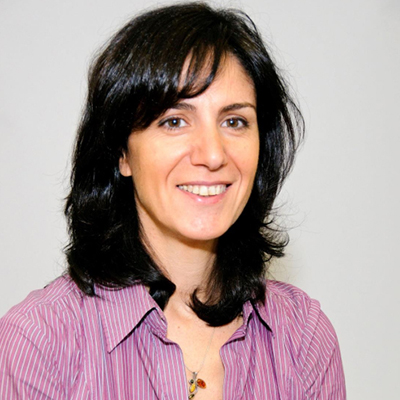
James A. Sauls
LSU Lead PI
Superconducting Properties, Co-Lead
Professor and Hearne Chair of Theoretical Physics, Hearne Institute of Theoretical Physics, Department of Physics and Astronomy, Louisiana State University
Cryogenics
Scaling dilution refrigeration technology to meet the higher cooling power and reliability demands of future quantum data centers.
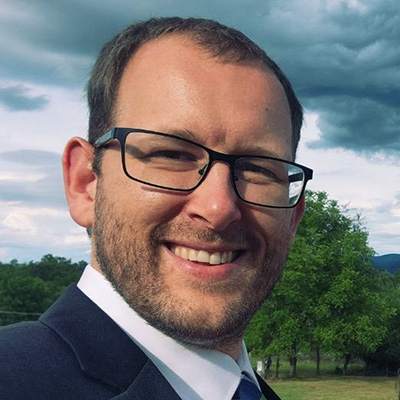
Systems Design
The Systems Design sub-thrust advances scalable SRF-cavity-based quantum hardware through integrated system engineering and novel control schemes. We design and build quantum processing units that combine long-lived quantum memories with ancillary qubits and couplers, along with the wiring, filtering, and thermalization needed for cryogenic operation. We also develop high-fidelity state preparation, entanglement, and measurement protocols that enable robust quantum information processing.
Yao Lu
Technology Thrust Deputy Leader
Systems Design, Lead
Associate Scientist, Fermilab
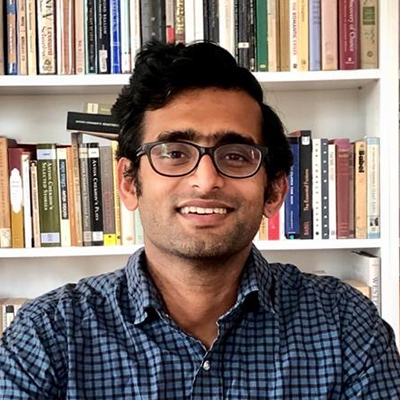
Srivatsan Chakram
Assistant Professor, Rutgers University; Devices Focus Area Lead Team Member, SQMS
Architectures & Use Cases Thrust
Silvia Zorzetti
Architectures & Use Cases Thrust Leader
Department Head, Quantum Computing Co-Design and Communication, Fermilab
Tanay Roy
Architectures & Use Cases Deputy Thrust Leader
Device Performance, Co-Lead
Computing Use Cases, Co-Lead
Associate Scientist, Fermilab
Computing Use Cases
The Computing Use Cases sub-thrust develops near-term quantum computing applications tailored to realistic hardware constraints, with the goal of demonstrating credible proof-of-concept quantum advantage. Beginning with simplified, well-characterized problems, the group advances toward real-world–inspired use cases that connect experimental capabilities to scientifically and technologically relevant computational tasks.
Tanay Roy
Architectures & Use Cases Deputy Thrust Leader
Device Performance, Co-Lead
Computing Use Cases, Co-Lead
Associate Scientist, Fermilab
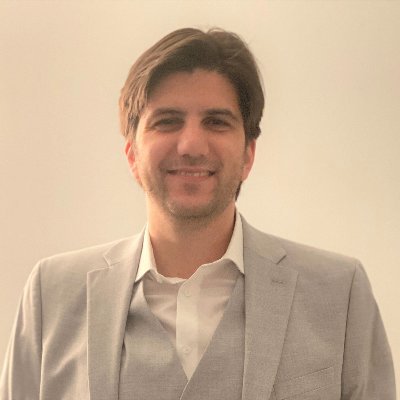
Middleware, Software Stack
The Middleware Sub-Thrust focuses on providing control software and algorithms for the 3D and 2D QPU. This sub-thrust lies between theory and hardware to ensure they progress together.
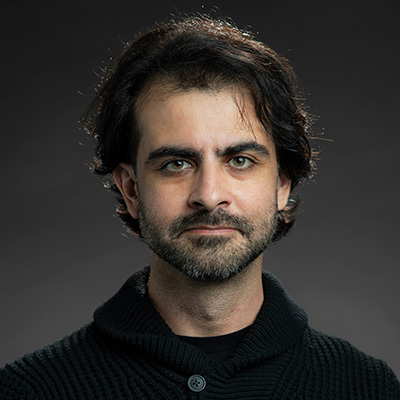
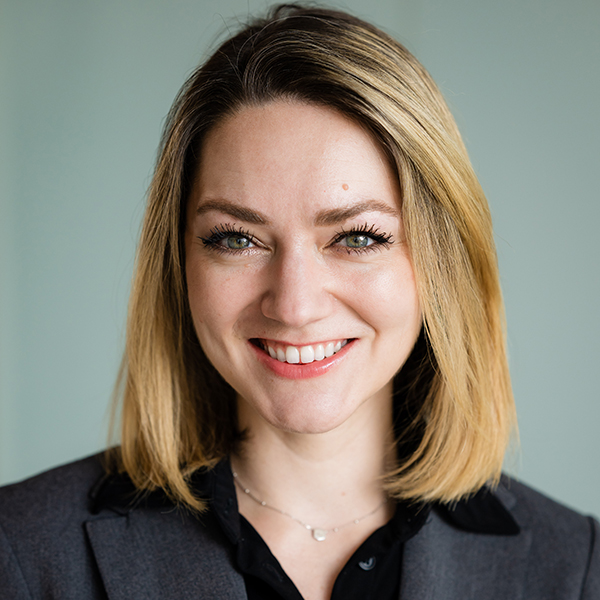
Kate Smith
Middleware & Software Stack, Deputy Lead
Assistant Professor of Computer Science, Northwestern University
Low-Level RF Engineering
The Low-Level RF Engineering thrust within SQMS provides the control infrastructure for precise manipulation and measurement of superconducting quantum processors. The effort leverages FPGA-based platforms, including the Quantum Machines Quantum Orchestration Platform, to translate device-level physics into programmable control operations. Activities include system bring-up, calibration graph development, and control stack integration to enable high-fidelity, scalable, and reproducible qubit experimentation.
Magnetometry for Materials
The measurement of magnetic fields near the surface of superconducting devices provides essential information for understanding mechanisms of decoherence, including those associated with dynamics of vortices or magnetic impurities.
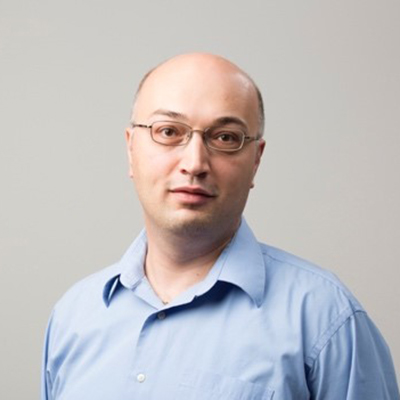
Adrian Lupascu
Magnetometry for Materials, Co-Lead
Associate Professor, University of Waterloo
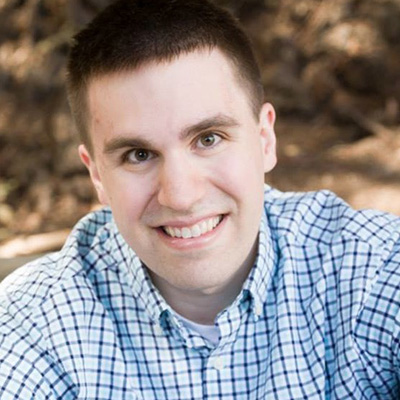
Tim Kovachy
Magnetometry for Materials, Co-Lead
Assistant Professor, Northwestern University
Architecture and Resource Estimates
Envision longer-term architectures based on SQMS SRF technologies tailored to realizing target high-impact SQMS applications, in both the LISQ (logical intermediate-scale) and Fault Tolerant (FT) eras. Perform resources estimation of SQMS applications, identifying risks, challenges, and unknowns, feeding into center priorities.
Eleanor G. Rieffel
NASA Ames Research Center Lead PI
Architecture & Resource Estimates, Lead
NASA Senior Researcher for Advanced Computing and Data Analytics and QuAIL Lead, NASA Ames Research Center
Quantum / Classical Demonstrations
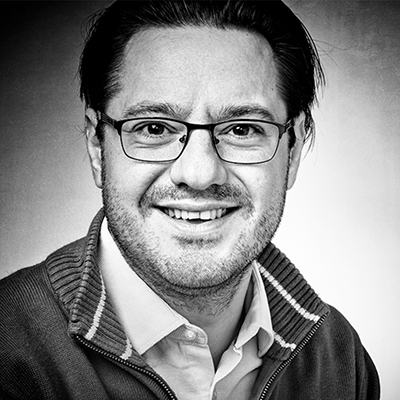
Quantum Science Thrust
Roni Harnik
Science Thrust Leader
Senior Scientist, Quantum Theory Department Head, Fermilab
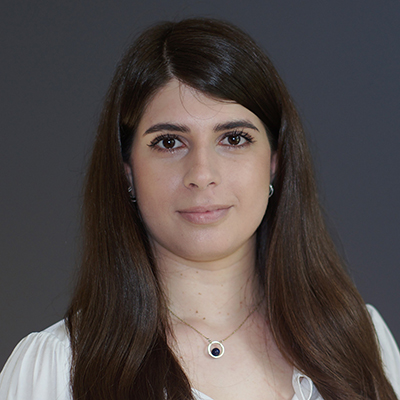
Bianca Giaccone
Science Thrust Deputy Leader
Sensing for Particle Physics, Co-Lead
Associate Scientist, Fermilab, SQMS
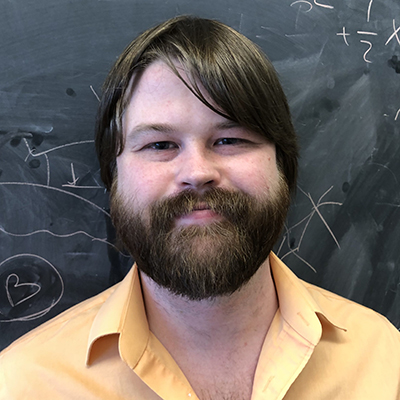
Henry Lamm
Science Thrust Deputy Leader
Qudit Theory & Error Correction, Co-Lead
Scientist, Fermilab
Sensitive Magnetometers for Quantum Sensing Applications
Flux tunable superconducting devices are very sensitive magnetometers. We explore applications of such magnetometers in fundamental physics and condensed matter physics.
Adrian Lupascu
Magnetometry for Materials, Co-Lead
Associate Professor, University of Waterloo
Tim Kovachy
Magnetometry for Materials, Co-Lead
Assistant Professor, Northwestern University
Qudit Theory and Error Correction
The Qudit Theory & Error Correction sub-thrust focuses on developing qudit-based quantum computers, exploring how these higher-dimensional quantum states can be leveraged for computation. This research area would particularly concentrate on designing error correction codes and fault-tolerant protocols specifically tailored to qudit systems, which may offer advantages like more efficient error correction, reduced overhead, or novel computational capabilities compared to qubit-based approaches.
Henry Lamm
Science Thrust Deputy Leader
Qudit Theory & Error Correction, Co-Lead
Scientist, Fermilab
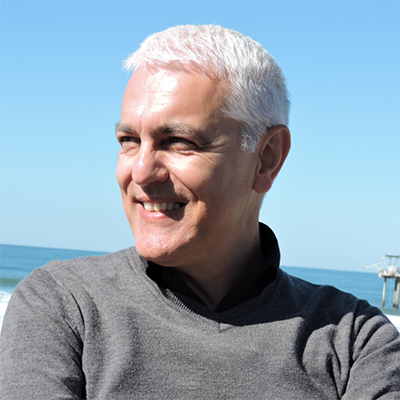
HEP/CMP Quantum Simulations
The Condensed Matter and High Energy Physics Applications sub-thrust is focused on designing quantum simulation protocols to meet the emerging capabilities of SQMS hardware. We study topics ranging from lattice gauge theory to materials science to quantum chaos with the goal of addressing fundamental scientific questions with qudit-based architectures.
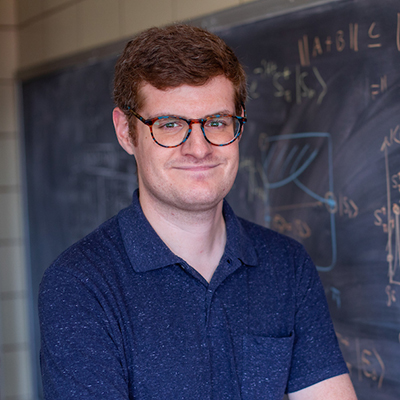
Thomas Iadecola
HEP/CMP Quantum Simulations, Co-Lead
Associate Professor, Penn State University; Contributor, Ames National Laboratory
Experimental Tests of Quantum Theory
Testing quantum mechanics is an endeavor of the highest scientific priority because quantum mechanics serves as the bedrock for all of modern physics. The theory defines the boundaries of what is technologically possible, governing the rules of quantum computing and sensing. Because the theory is so foundational, any deviation from standard quantum mechanics would be revolutionary. It would fundamentally alter our conception of the laws of nature and the engineering capabilities that follow from them. Consequently, funding tests of quantum mechanics is not merely about verifying an old theory; it is about probing the structural integrity of our understanding of the universe.
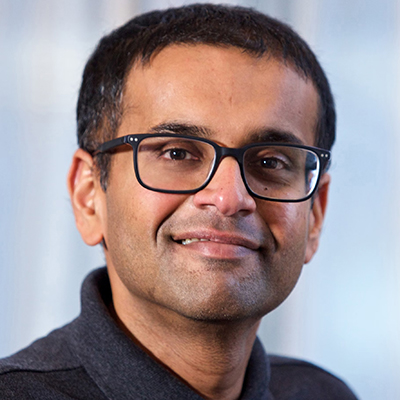
Surjeet Rajendran
Experimental Tests of Quantum Theory, Lead
Associate Professor, Johns Hopkins University
Sensing for Particle Physics
The Sensing for Particle Physics sub-thrust focuses on advancing the discovery potential of fundamental physics searches, including Beyond the Standard Model physics, dark sector searches, and high-frequency gravitational waves. This effort leverages quantum sensing techniques based on state-of-the-art superconducting cavities and quantum devices, both in dedicated experiments and in synergy with the 3D computing platforms.
Bianca Giaccone
Science Thrust Deputy Leader
Sensing for Particle Physics, Co-Lead
Associate Scientist, Fermilab, SQMS
Caterina Braggio
INFN Lead PI
Sensing for Particle Physics, Co-Lead
Associate Professor, University of Padova & INFN